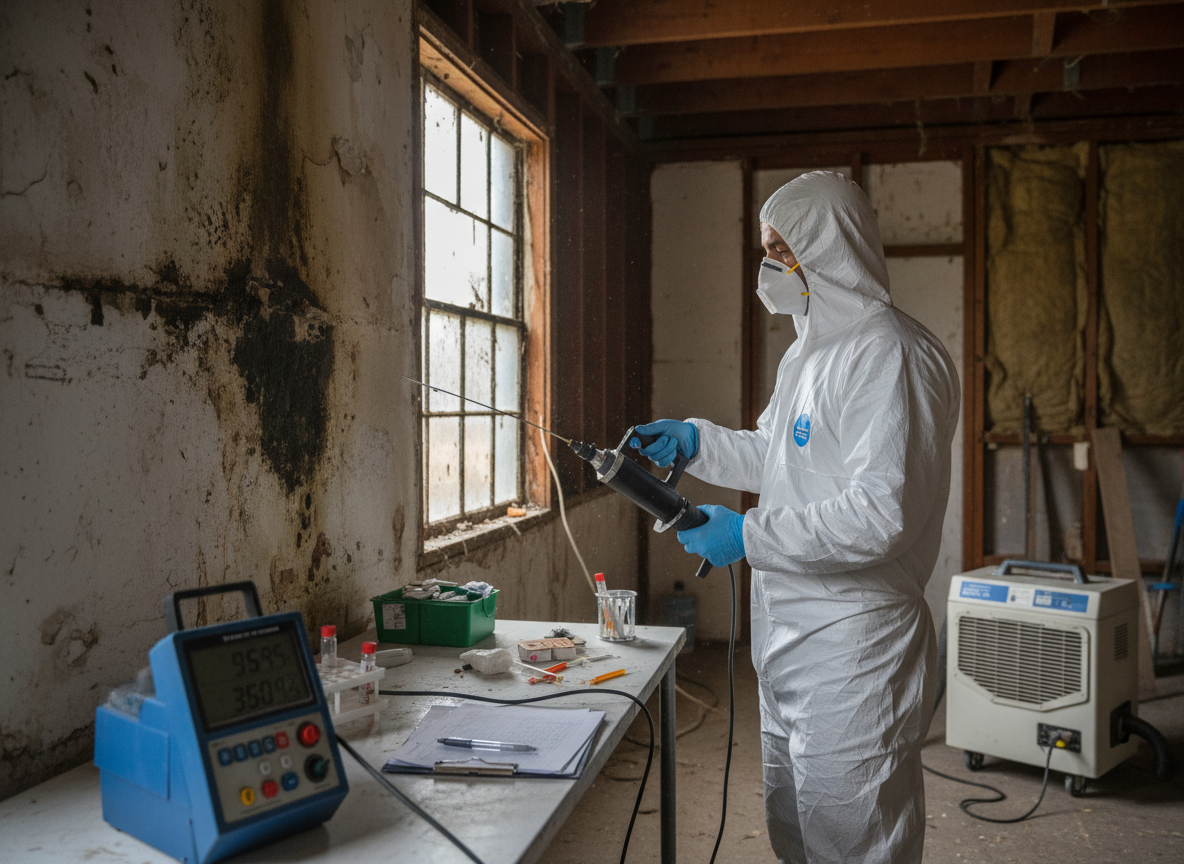
Air sampling in Guasti homes often reveals elevated spore counts in structures built before 1970 where original plaster and lath walls trap moisture from occasional winter storms. Technicians collect both indoor and outdoor baseline samples using calibrated pumps to compare spore types and concentrations, then follow up with moisture meter readings on concrete slabs common in the flat terrain near the old winery district. This step identifies whether visible discoloration on baseboards stems from active growth or settled dust from the nearby rail corridor.
Surface swab testing targets areas behind kitchen cabinets and in bathroom exhaust fan housings where poor ventilation meets the area's low annual rainfall yet sudden downpours overwhelm roof flashings. Lab results distinguish between common outdoor molds and indoor colonizers such as Stachybotrys that thrive on the gypsum board used in 1980s tract additions. Reports include chain-of-custody documentation suitable for insurance adjusters handling claims along Turner Avenue and adjacent streets.
Post-remediation verification testing confirms clearance levels before reoccupancy, especially important in mixed-use buildings near the Guasti Road corridor where commercial kitchens can reintroduce humidity. Technicians re-sample air after dehumidification equipment runs for the required drying period, comparing results against the initial baseline to verify that spore counts have returned to outdoor ambient levels.
Technician insight
In Guasti, the thing that catches most people out with Air quality and mold testing is how the flat terrain around the old packing houses lets irrigation runoff pool against stucco foundations after even light rains, pushing moisture into crawl spaces that never fully dry in our low-humidity climate.
Moisture Behind Kitchen Cabinets
A Guasti homeowner noticed a musty smell near the sink after winter rains. Sampling showed elevated Aspergillus behind the original 1960s cabinets where slab moisture had wicked upward. We isolated the area, documented spore levels, and provided a clearance plan once the source leak was fixed.
How it works
- 1
Initial Assessment
Review property history and visible concerns with the owner at the Guasti address to determine sampling locations.
- 2
On-Site Sampling
Collect air and surface samples plus moisture readings across affected rooms and control areas outside.
- 3
Laboratory Analysis
Submit samples to an accredited lab for spore identification and concentration reporting.
- 4
Detailed Report Delivery
Provide written findings with recommendations and clearance criteria within 48 hours.
Pricing
Pricing varies by number of samples required and property size; upfront quotes given after initial assessment.