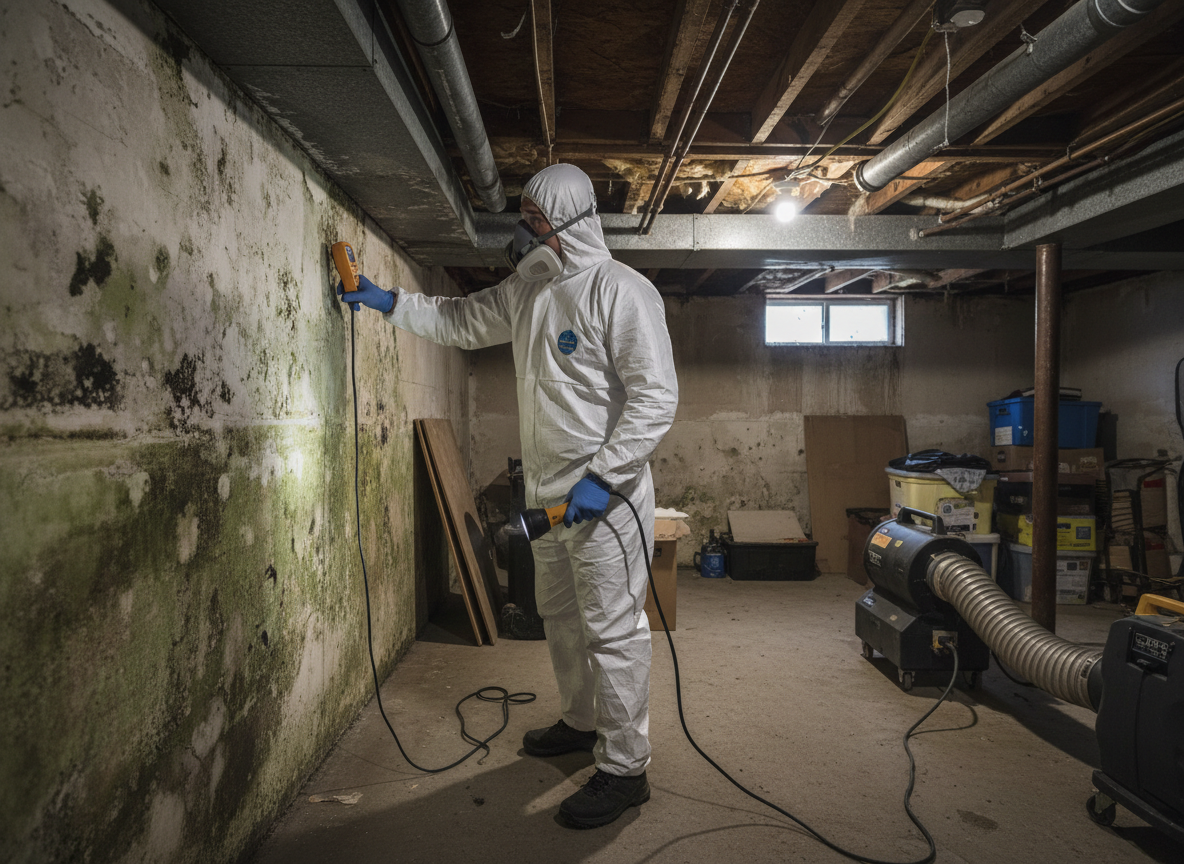
Basement mold inspection in Guasti requires checking below-grade walls and slabs where irrigation runoff from surrounding properties often pools against foundations. Technicians start with moisture mapping using pin and pinless meters on concrete and framing, paying special attention to the 1940s-1960s homes near Turner Avenue that frequently have unsealed block walls. Air sampling and surface swabs are taken only after visual and olfactory checks rule out obvious sources like leaking irrigation lines or cracked window wells common in San Bernardino County.
Edge cases include finished basements where carpet or paneling hides growth along the sill plate, a frequent issue after rare but intense winter rains. Inspectors also examine HVAC returns that pull air from below grade, noting how dust and spores travel into living spaces. All findings reference visible conditions only; no remediation recommendations are made until the inspection report is complete and reviewed with the homeowner.
Local terrain around Guasti creates additional challenges because many lots slope toward the structure rather than away from it. This directs water against basement walls during storms, raising relative humidity in enclosed spaces for weeks. The inspection always includes exterior grading review and sump pump functionality checks when present, documenting any standing water or efflorescence that signals ongoing moisture intrusion from the soil.
Technician insight
In Guasti, the thing that catches most people out with Basement mold inspection is how the flat lots near the old winery district let irrigation water sit against foundations for days. Homeowners often finish the space without adding French drains, so growth starts on the back side of drywall where we find it only with meters.
Moisture Behind Finished Walls
A Guasti homeowner noticed a faint musty smell after winter rains but saw nothing on open surfaces. Inspection revealed elevated moisture readings along the north wall where the lot slopes inward. We documented the grading issue and collected air samples from the finished area. The report allowed the owner to address exterior drainage before any growth spread further into the framing.
How it works
- 1
Site Walkthrough
Technician arrives at the Guasti address and walks the exterior to note grading, downspouts, and irrigation before entering the basement.
- 2
Moisture and Visual Survey
Meter readings are taken on walls, floors, and framing while checking for stains, musty odors, and visible growth behind stored items.
- 3
Sampling and Documentation
Air or surface samples are collected if needed, with all findings logged by location and accompanied by photos for the written report.
- 4
Report Delivery
Homeowner receives a written summary of conditions observed and any recommended next steps for further evaluation or monitoring.
Pricing
Pricing depends on square footage, finished versus unfinished space, and number of samples required; upfront quotes provided after phone description of the property.