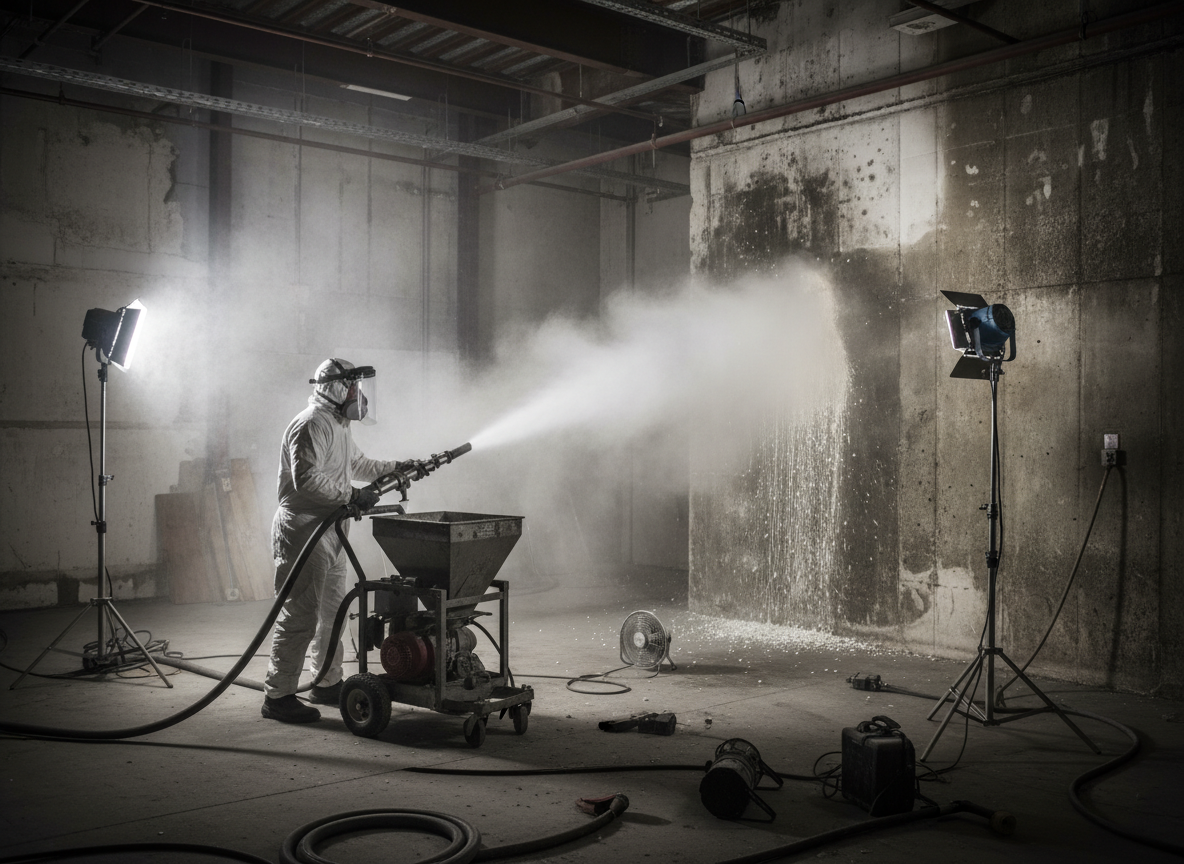
Dry ice blasting uses solid CO2 pellets accelerated at high velocity to lift mold from wood, concrete, and metal surfaces common in Guasti homes and warehouses. The process sublimes on contact, leaving no secondary waste that could reintroduce moisture in the dry San Bernardino County climate. Technicians wear full PPE and contain the work area with negative air machines to keep spores from migrating into adjacent rooms or HVAC systems.
Older industrial buildings near the 323 N Turner Ave address often have layered coatings and tight crawl spaces where mold follows roof leaks from rare but intense winter rains. Blasting reaches behind lath and plaster without demolition that standard sanding would require. Post-blast HEPA vacuuming and surface sampling confirm clearance before any encapsulation coatings are applied.
This method avoids the water introduction that liquid antimicrobials can cause in Guasti’s low-humidity environment, reducing the risk of new growth behind stucco or in attic insulation. It is especially useful on electrical components and machinery where residue from other cleaning methods could create conductivity issues.
Crew members monitor pellet feed rate and nozzle distance to prevent substrate damage on soft woods or aged brick found in some Guasti properties. Work stops immediately if hidden voids or active leaks are discovered so the source can be corrected before blasting resumes.
Technician insight
In Guasti, the thing that catches most people out with dry ice blasting mold is how quickly spores travel through the open rafters of older industrial buildings near the airport when winter rains hit the flat roofs. Homeowners often seal visible spots without addressing the hidden layer behind the original plaster, so the growth returns the next time humidity spikes from a slow leak.
Hidden Mold in Warehouse Office
A small warehouse office near Guasti showed musty odors after a roof drip. Inspection found colonies behind paneling and in the ceiling plenum. Dry ice blasting removed growth from framing and ductwork without introducing moisture. Clearance samples passed and the space reopened the same week.
How it works
- 1
Site Assessment
Technicians inspect all affected surfaces, identify moisture sources, and map containment zones around the property.
- 2
Containment Setup
Negative air machines and plastic barriers isolate the work area to prevent spore spread to unaffected rooms.
- 3
Dry Ice Blasting
Pellets are applied at controlled pressure to remove mold colonies from wood, concrete, and metal without added water.
- 4
Final Clearance
HEPA vacuuming and air sampling verify removal before barriers are taken down and the space is returned to use.
Pricing
Cost depends on square footage, surface type, and access difficulty; upfront written quotes provided after inspection.