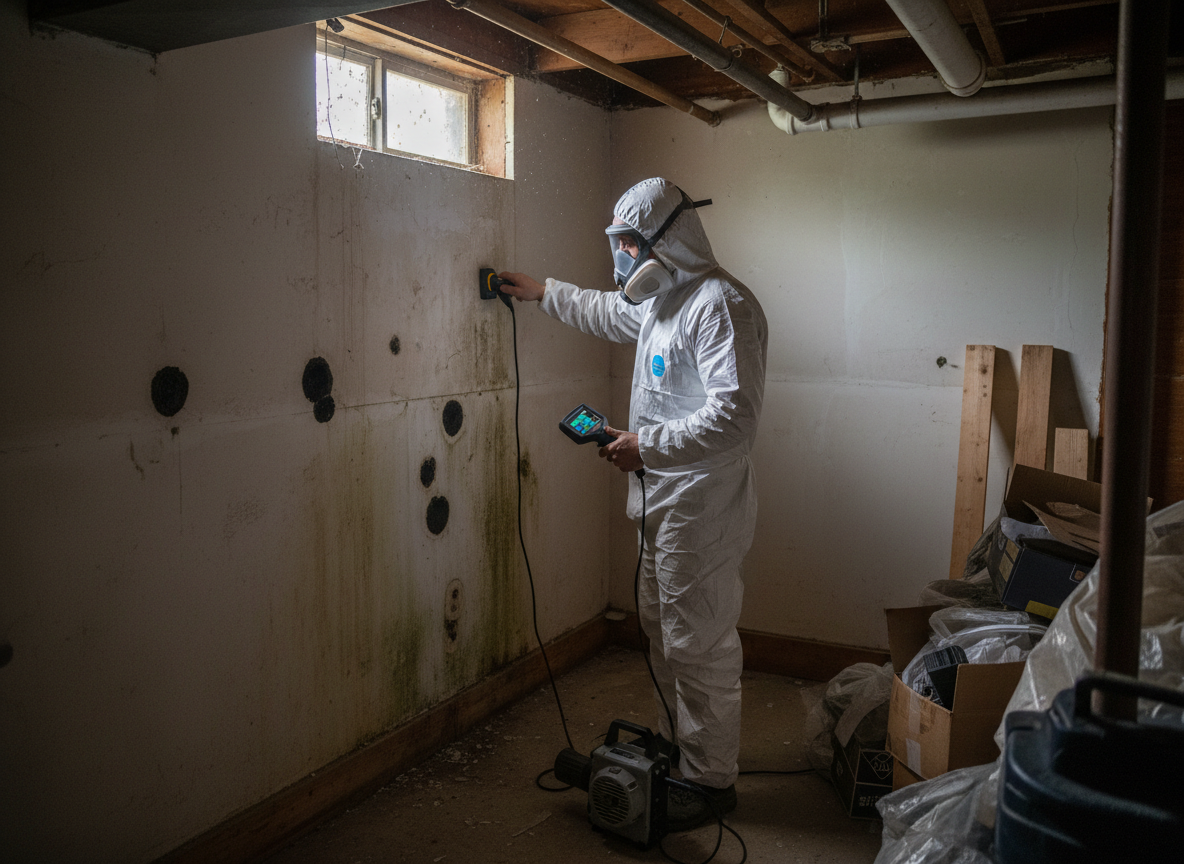
Guasti sits in San Bernardino County near the Ontario airport with many mid-century stucco homes and older industrial-adjacent properties that developed roof leaks or poor attic ventilation over decades. During inspection we use moisture meters and borescopes to check behind drywall, under sinks, and in crawl spaces where irrigation runoff from nearby fields can seep into foundations. Dry summers often hide active growth until the first winter rains trigger it, so we focus on thermal imaging of exterior walls that face prevailing winds.
Edge cases we see regularly include mold in HVAC ducts of 1960s tract homes where condensation from swamp coolers mixes with dust, and hidden growth in garages converted without proper vapor barriers. We document every affected material type—whether drywall, insulation, or subfloor—so homeowners know exactly what needs removal versus what can be cleaned. San Bernardino County building codes require permits for any work that disturbs more than ten square feet of moldy material, which we note in every report.
Homeowners often overlook the connection between cracked stucco and mold on north-facing walls where morning dew lingers longest. We always test both indoor air and exterior soil moisture levels around the foundation because Guasti’s sandy loam retains water longer than expected after rare heavy rains. This prevents repeat issues that surface months later when residents turn on heaters and push trapped humidity into living spaces.
Technician insight
In Guasti, the thing that catches most people out with Home mold inspection is the older stucco tract homes near the rail line where roof penetrations around swamp cooler ducts let in just enough moisture during Santa Ana winds to grow mold deep in attic insulation without any visible ceiling stains.
Attic Mold Found After AC Leak
A Guasti homeowner noticed a faint musty smell in the hallway after an unusually humid October. We located elevated moisture in the attic insulation directly above the central air handler where the condensate line had been dripping for months. Samples confirmed aspergillus growth; the report guided targeted removal of the affected insulation and repair of the line before the next rain season.
How it works
- 1
Initial Walkthrough
We examine every room, attic access, and exterior grade around the foundation while noting visible water stains and musty odors.
- 2
Moisture and Thermal Mapping
Handheld meters and infrared cameras locate hidden damp areas behind walls and under floors without demolition.
- 3
Sample Collection
Air and surface samples are taken from suspect zones and sent to an independent lab for species identification.
- 4
Detailed Report Delivery
Findings include photos, moisture readings, lab results, and a prioritized list of recommended next steps.
Pricing
Cost depends on square footage, number of stories, and accessibility of attics or crawl spaces.