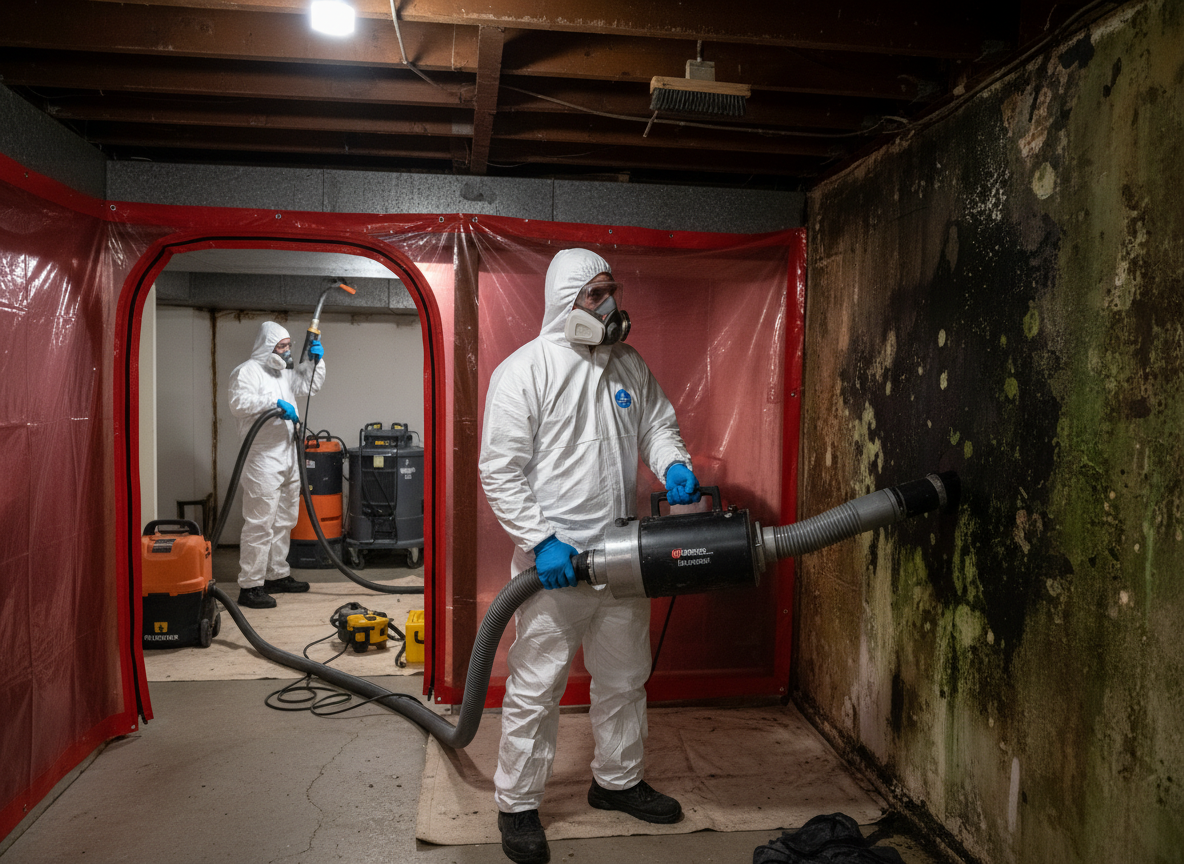
Mold remediation in the Guasti area often starts with moisture trapped behind stucco or in crawl spaces of older housing stock common throughout San Bernardino County. Winter rains followed by hot dry summers create repeated wetting and drying cycles that push growth into wall cavities and under flooring. Technicians must map hidden moisture with meters before any demolition because cutting into the wrong section can spread spores into living spaces.
Containment protocols change with the building type found in Guasti. Single-story ranch homes allow simpler negative-air setups than the mixed-use commercial buildings near the historic district, where shared walls require sealed barriers on multiple sides. Removal includes HEPA vacuuming of all surfaces and disposal of porous materials like drywall and insulation that cannot be salvaged once colonized.
Post-remediation verification includes third-party air sampling when requested, followed by drying the structure to below 15 percent moisture content before any reconstruction. Homeowners in the Guasti area frequently discover that roof penetrations around HVAC units or poorly sealed windows are the original entry points, so addressing those details prevents recurrence after the remediation crew leaves the site.
Technician insight
In Guasti, the thing that catches most people out with mold remediation company is how quickly summer heat dries the surface while moisture stays trapped behind stucco on pre-1980 homes near the old winery district, so the visible stain disappears but the cavity stays wet until we open it.
Crawl Space Growth After Winter Rain
A Guasti homeowner noticed a musty smell after heavy rains. Inspection found standing water under the floor from a cracked perimeter drain. We contained the space, removed saturated insulation, treated the joists, and installed a vapor barrier before drying the structure to safe levels.
How it works
- 1
Initial Inspection And Moisture Mapping
Technicians arrive within hours, use moisture meters and thermal imaging to locate all affected areas without disturbing surfaces yet.
- 2
Containment And Air Filtration
Plastic barriers and negative-air machines isolate the work zone so spores do not migrate into clean sections of the home.
- 3
Removal Of Contaminated Materials
Porous items are bagged and removed, non-porous surfaces are cleaned with HEPA methods, and the area is dried to safe levels.
- 4
Final Clearance And Drying Verification
Moisture readings and optional air samples confirm the space meets clearance criteria before barriers come down.
Pricing
Upfront quotes provided after inspection; final cost depends on extent of hidden growth and materials affected.