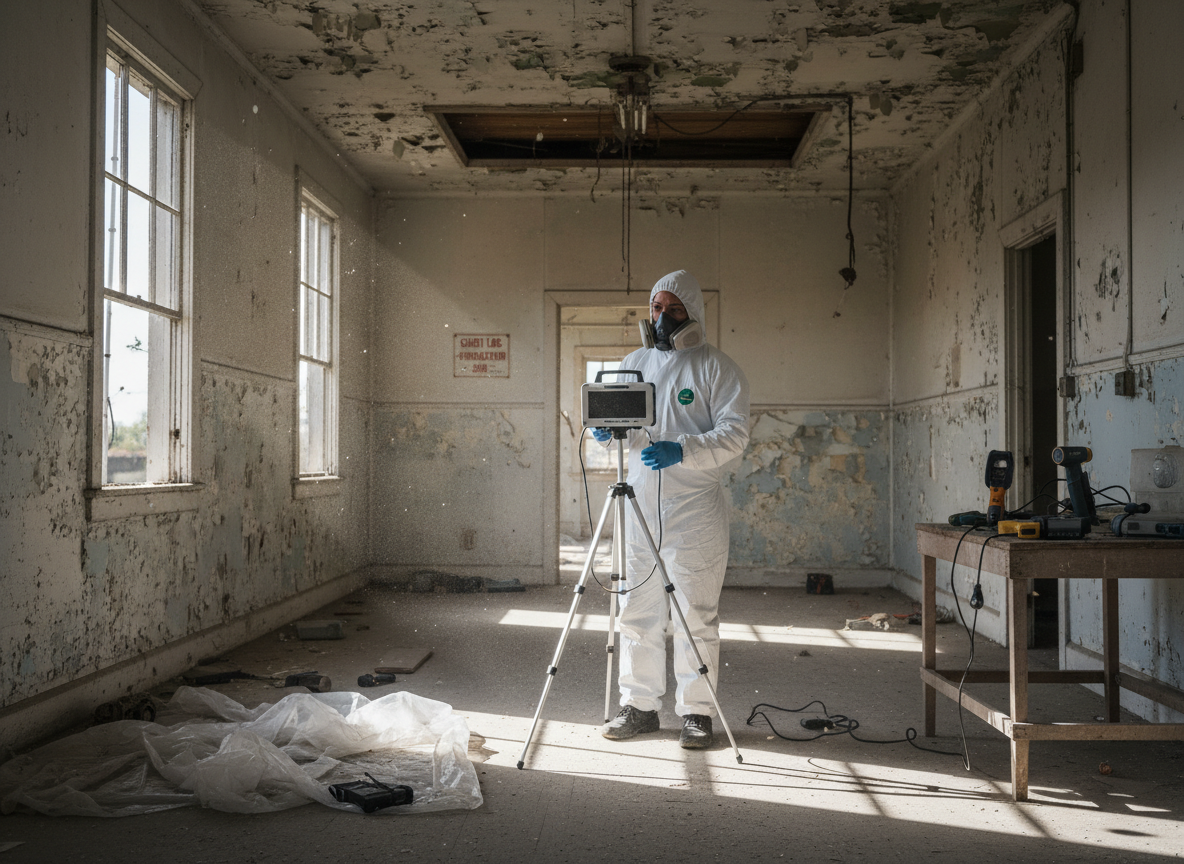
Mold spore testing identifies the types and concentrations of spores present in indoor environments through air sampling cassettes and surface tape lifts. In Guasti homes built near the rail corridor and older industrial zones, moisture from seasonal Santa Ana wind shifts followed by sudden downpours often drives hidden growth in crawlspaces and behind stucco. Technicians collect samples from multiple zones including HVAC returns and living areas, then compare indoor counts against outdoor baselines collected the same day to avoid misattributing regional allergens.
Proper chain of custody and lab analysis at accredited facilities ensures results distinguish between common outdoor species like Cladosporium and indoor amplifiers such as Stachybotrys. Properties converted from warehouse use along Turner Avenue frequently show elevated readings in sealed concrete floors where previous water intrusion went unnoticed. Testing also flags whether remediation has succeeded by verifying spore levels have returned to normal background ranges before final clearance.
Homeowners sometimes skip pre-testing and proceed directly to removal, only to discover the original moisture source remains unaddressed and spores return within weeks. Sampling locations must account for Guasti's mix of single-story ranch homes and multi-unit buildings where shared walls allow cross-contamination between units. Results guide whether containment barriers or negative air machines are required during any follow-up work.
Technician insight
In Guasti, the thing that catches most people out with mold spore testing is how the flat terrain and older concrete slab foundations trap moisture after rare heavy rains, pushing spores into living spaces through slab cracks rather than obvious roof leaks.
Elevated Spores After Winter Rains
A Guasti resident reported persistent odors in a converted warehouse space near the rail lines. Testing revealed elevated Aspergillus spores tied to a slab-edge moisture issue. Samples confirmed the source and guided targeted drying before any removal work began, restoring normal spore counts.
How it works
- 1
Site Assessment
Technician reviews property layout and history of leaks or odors while noting construction type common to Guasti neighborhoods.
- 2
Sample Collection
Air and surface samples are taken from targeted rooms plus an outdoor control location using calibrated equipment.
- 3
Laboratory Analysis
Samples are sent for spore identification and quantification with results typically available within 48 hours.
- 4
Report Delivery
Detailed findings include spore types, concentrations, and recommendations for next steps if elevated levels appear.
Pricing
Cost depends on number of samples, property size, and whether rush lab processing is needed.