Mold odors in Guasti often trace to hidden moisture trapped behind stucco or in older wood-frame homes near the historic district and Turner Avenue corridor. These structures, built decades ago, frequently develop leaks at roof penetrations or around window frames during rare but intense winter rains. Removing the smell requires locating every damp pocket with moisture meters and thermal imaging, then cutting out affected drywall or insulation before any surface treatment. Simply fogging or painting over fails because the source stays wet in the dry Inland Empire air that masks ongoing growth.
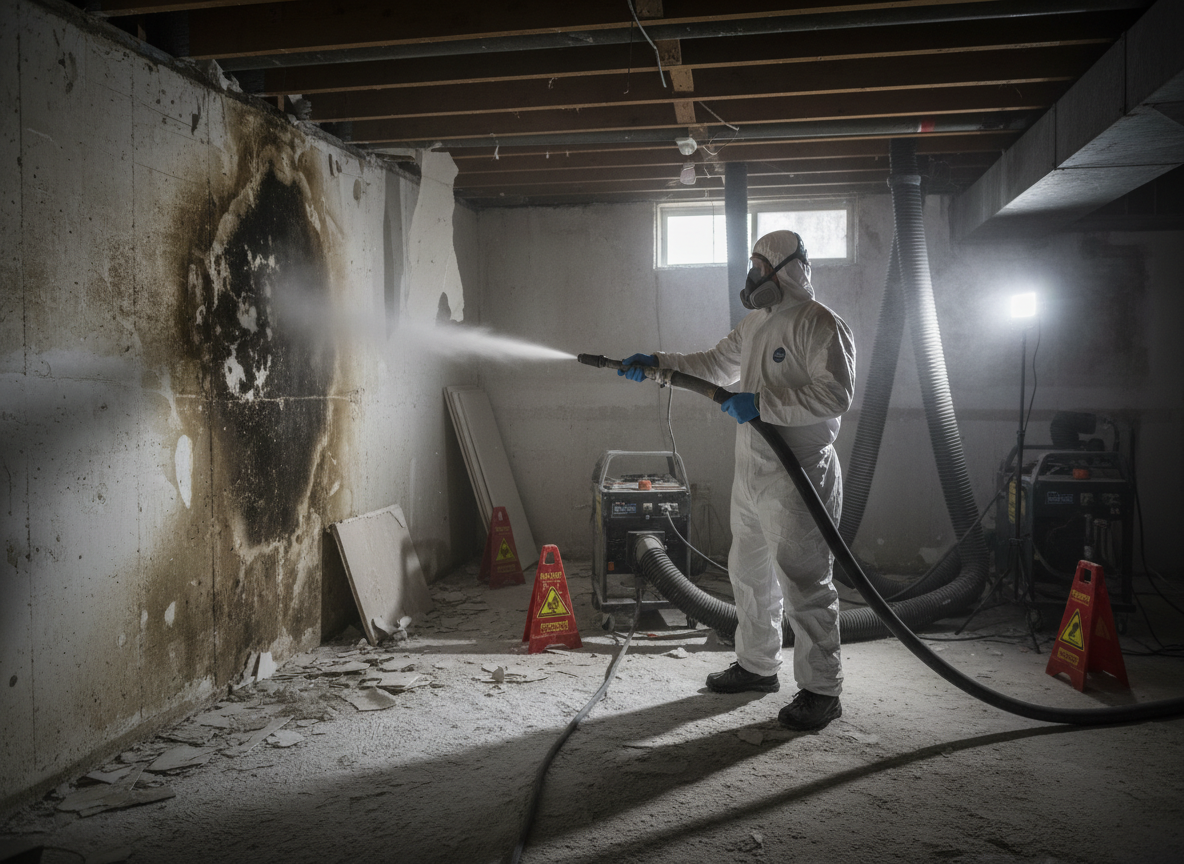
Airflow patterns in Guasti properties matter. Many single-story homes here have low-slope roofs and minimal attic ventilation, so musty smells travel through HVAC returns and settle in living areas. Proper odor removal includes isolating the affected zone, using negative air machines with HEPA filtration, and applying EPA-registered antimicrobials only after the moisture source is fixed. Technicians also check soil grading around the foundation, since clay-heavy ground near the railroad tracks holds water against stem walls longer than sandy soils farther east.
Commercial spaces along the industrial edges of Guasti face different challenges. Warehouses and small manufacturing buildings often have slab-on-grade floors where plumbing leaks or condensation from cooling equipment create persistent odors under equipment pads. Remediation here means lifting sections of flooring or sealing concrete after drying, plus verifying that the odor has not migrated into adjacent tenant spaces through shared wall cavities.
Post-remediation clearance testing confirms both visible growth and airborne spores are gone before any reconstruction. Homeowners receive a written report noting exactly which materials were removed and where moisture readings dropped below safe thresholds. This documentation helps when dealing with insurance adjusters familiar with San Bernardino County claims.
Technician insight
In Guasti, the thing that catches most people out with odor removal mold is water trapped against the concrete stem walls in homes built before 1970 near the old winery district. Those clay soils along Turner Avenue hold moisture for weeks after a storm, so the smell returns unless you excavate and seal the exterior grade.
Hidden Odor Behind Kitchen Cabinets
A Guasti homeowner noticed a persistent musty smell near the sink but saw no visible growth. Inspection revealed a slow leak from an old cast-iron drain line that had soaked the subfloor and base of the cabinets. Crews removed the lower cabinets and saturated plywood, dried the joists, treated the concrete, and sealed the exterior soil line. The odor disappeared and did not return after the next rain.
How it works
- 1
Inspection and Moisture Mapping
Technicians arrive with meters and cameras to trace every damp area in Guasti homes, including attics, crawl spaces, and wall cavities.
- 2
Containment and Source Removal
Affected materials are cut out and bagged while negative air pressure keeps spores from spreading to clean rooms.
- 3
Drying and Antimicrobial Treatment
Industrial air movers and dehumidifiers bring moisture levels down, followed by targeted treatments on remaining surfaces.
- 4
Odor Verification and Clearance
Air sampling and sensory checks confirm the musty smell is gone before any rebuilding begins.
Pricing
Cost depends on square footage affected, depth of hidden growth, and whether HVAC cleaning is required. Upfront quotes given after inspection.