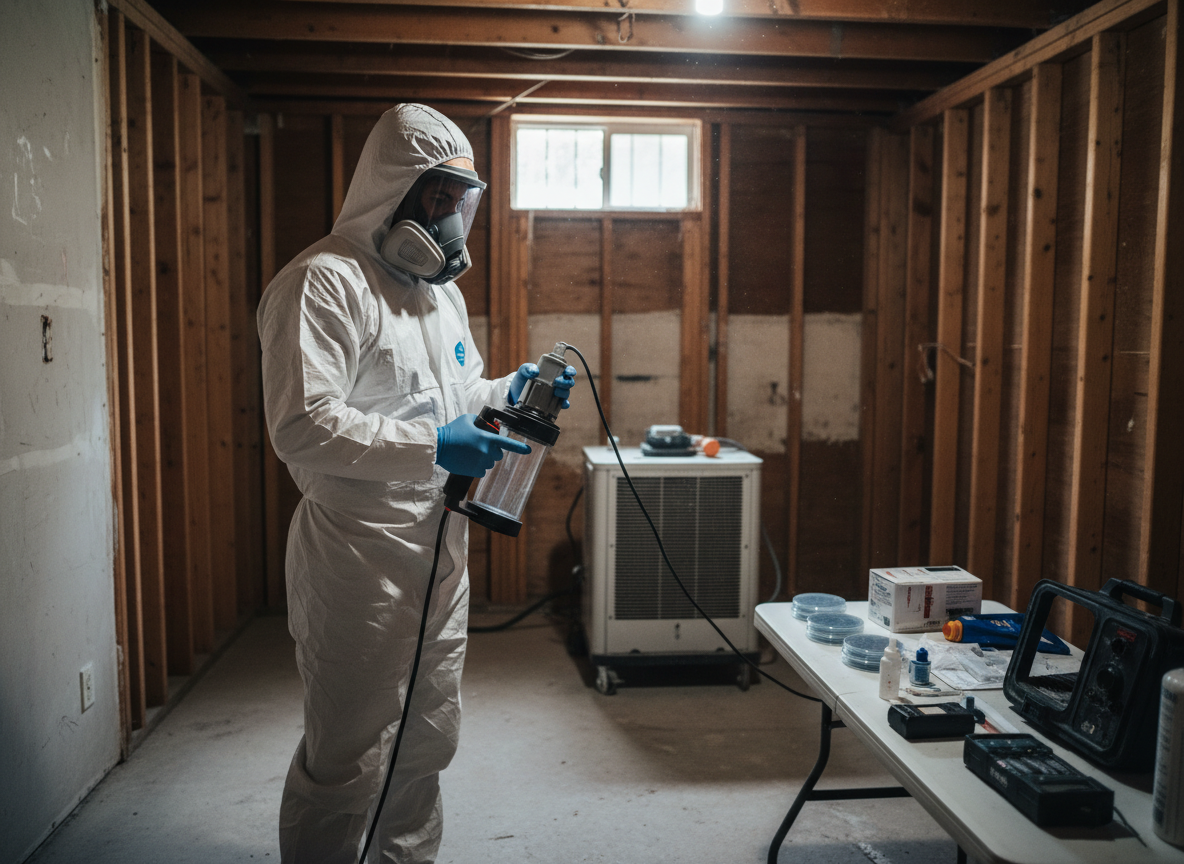
Post remediation mold testing requires systematic sampling of air and surfaces to detect any remaining spores or hidden growth. In Guasti homes built on concrete slabs near Turner Avenue, moisture can linger in subfloor voids or behind baseboards even after visible mold is gone. Technicians collect multiple air samples from affected rooms plus outdoor controls, along with tape lifts or swabs from previously impacted materials. Results are compared against outdoor baselines to determine if indoor levels meet clearance criteria.
Edge cases arise when remediation disturbs settled spores that later resettle on HVAC registers or in attic insulation common in older Guasti structures. Proper testing includes checking supply and return ducts plus any areas where water entered from seasonal storms. Reports must document sample locations, laboratory chain of custody, and spore counts by genus so property owners receive clear documentation for insurers or future buyers.
Testing too soon after remediation can produce misleading results because disturbed particles remain airborne. A minimum settling period followed by negative air machine shutdown is standard before samples are taken. Homeowners sometimes skip this step and later discover hidden colonies when odors return during Santa Ana wind events that dry out previously damp cavities.
Technician insight
In Guasti, the thing that catches most people out with post remediation mold testing is the older slab-on-grade homes around the original winery district where irrigation lines from decades ago can leave residual moisture under tile that standard air sampling misses unless you pull baseboards and test the subfloor directly.
Recurring Odor After Initial Remediation
A Guasti homeowner called after musty smells returned in a bedroom following earlier mold work. We performed air and surface sampling across the room and adjacent hallway. Elevated Aspergillus spores appeared on one wall base. Targeted removal of the affected drywall section and retesting produced clearance results that allowed safe reoccupancy.
How it works
- 1
Site Walkthrough
Technician inspects all previously remediated areas and notes any new moisture sources or access limitations in the Guasti property.
- 2
Sampling Protocol
Air and surface samples are collected from multiple indoor zones plus an outdoor reference point using calibrated equipment.
- 3
Laboratory Analysis
Samples are sent to an independent lab for spore count identification and comparison against outdoor baselines.
- 4
Clearance Report
Detailed findings with sample locations, results, and recommendations are delivered within 48 hours of lab receipt.
Pricing
Pricing varies with the number of samples required and square footage of the tested space.