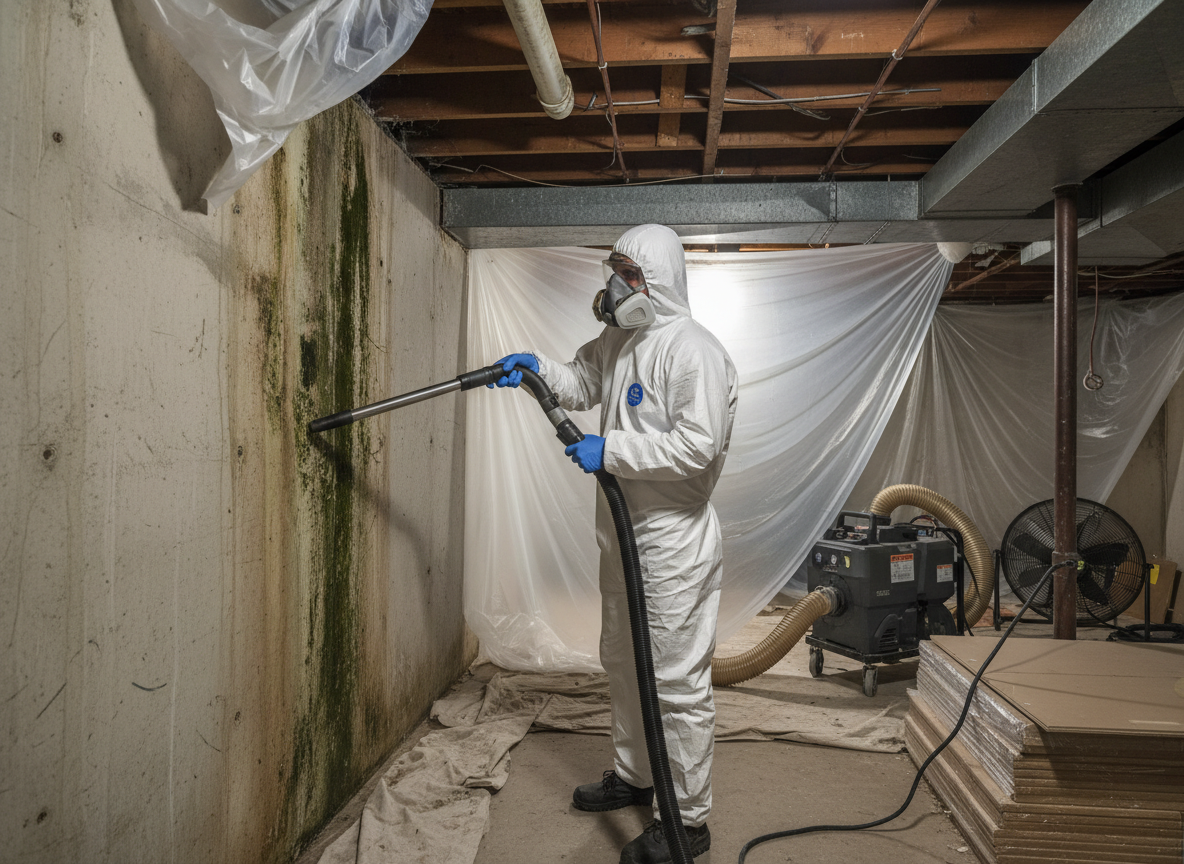
Guasti sits in San Bernardino County with a mix of mid-century residential stock and light industrial buildings that often feature stucco exteriors and slab-on-grade foundations. These details trap moisture from occasional winter rains or plumbing leaks behind walls and under floors, allowing mold to spread into drywall and subflooring before homeowners notice musty odors. Professional removal starts with source identification rather than surface cleaning, because the dry climate here can mask active growth until humidity spikes from indoor leaks or poor attic ventilation.
Technicians use negative-air machines and physical barriers to keep spores from migrating into living spaces during demolition of affected materials. In Guasti neighborhoods, crawl spaces under older homes frequently hold residual moisture from irrigation runoff on the flat terrain, so remediation includes drying equipment run times calibrated to local soil conditions rather than generic timelines. Post-removal verification focuses on moisture meter readings at multiple depths in framing, because returning humidity levels above 60 percent will restart growth within weeks.
Edge cases include mold behind built-in cabinetry in 1960s ranch homes where original plumbing lines have corroded at the slab penetration points. Code considerations in the Guasti area require proper disposal of contaminated materials at approved landfills and documentation of containment for insurance claims, especially when work borders commercial zones near the former winery district.
Technician insight
In Guasti, the thing that catches most people out with professional mold removal is moisture trapped behind stucco on mid-century homes where flat lots and aging irrigation lines let water pool against the foundation long after visible leaks stop.
Crawlspace Growth After Irrigation Line Failure
A Guasti homeowner noticed a persistent odor near the laundry room. Inspection revealed a cracked irrigation line feeding water under the slab into the crawlspace of a 1960s ranch house. Crews isolated the area, removed saturated insulation and moldy joist sections, then ran drying equipment for 72 hours until readings dropped below 12 percent. Follow-up visit confirmed no recurrence once the line was repaired.
How it works
- 1
Site Inspection
Technicians map visible and concealed moisture using meters and borescopes while noting construction details typical of Guasti homes.
- 2
Containment Setup
Plastic barriers and negative air pressure isolate the work zone to prevent spore spread into adjacent rooms.
- 3
Material Removal
Affected drywall, insulation, and wood are cut out and bagged for off-site disposal following local landfill rules.
- 4
Drying and Treatment
Air movers and dehumidifiers run until moisture readings stabilize, followed by EPA-registered antimicrobials on exposed surfaces.
- 5
Final Clearance
Post-remediation inspection confirms dry conditions and no visible growth before barriers come down.
Pricing
Upfront quotes issued after on-site inspection because access and hidden extent vary widely in Guasti properties.