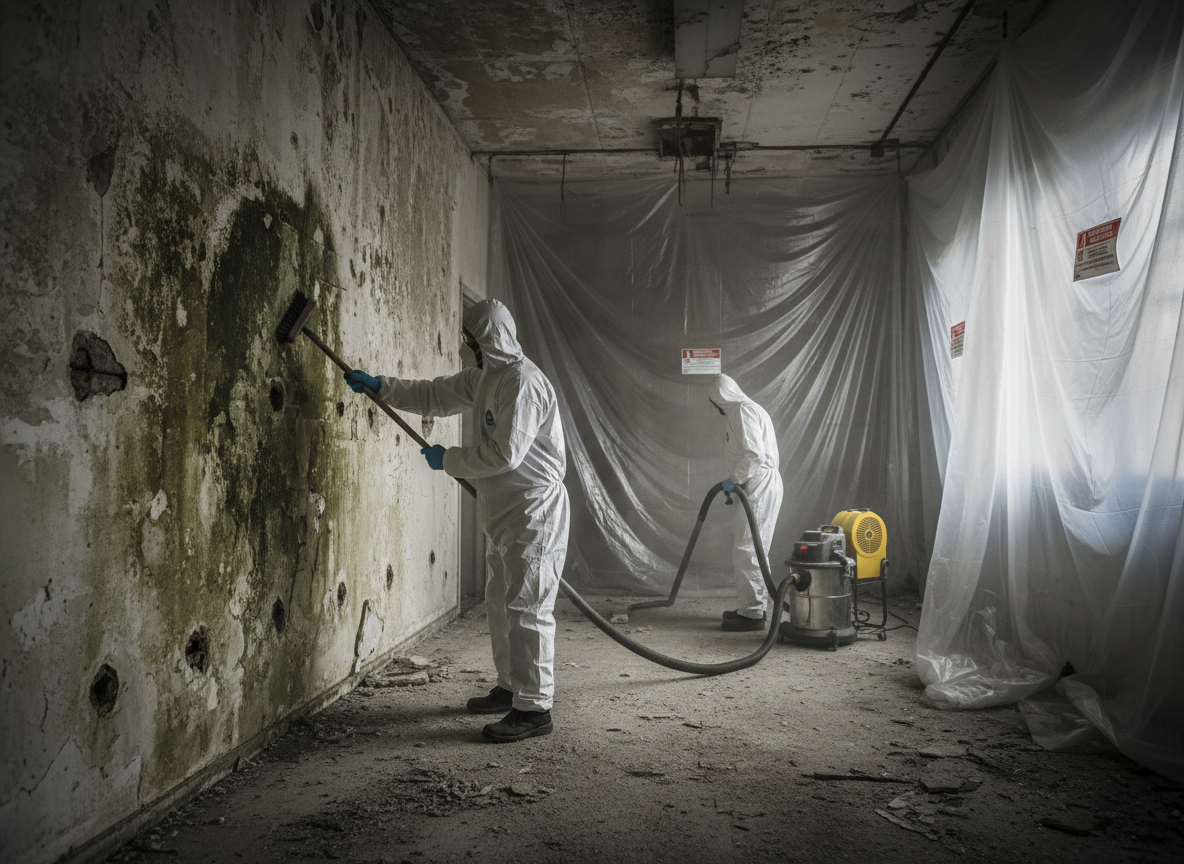
Toxic mold removal in Guasti often involves stachybotrys and aspergillus species that thrive behind stucco and in crawl spaces of homes built before 1980. These structures commonly have single-pane windows and minimal ventilation, allowing moisture from the nearby airport flight paths and winter rains to linger in wall cavities. Containment with negative air machines and HEPA filtration is required before any demolition to prevent spore release into adjacent rooms or neighboring units.
Edge cases appear when mold migrates into HVAC ductwork serving multiple suites in Guasti's light-industrial buildings near Turner Avenue. Removing contaminated insulation without disturbing settled dust demands sequential sectioning and post-remediation air sampling. Homeowners frequently discover growth only after a plumbing leak under slab foundations, where soil moisture from the area's high water table keeps cellulose materials damp for weeks.
California building codes require proper disposal of mold-laden materials at permitted landfills, and any work that disturbs more than ten square feet in multifamily dwellings triggers additional notification steps. Skipping source identification, such as failed roof flashings common on flat-topped warehouses along the railroad tracks, leads to rapid recurrence within the same season.
Technician insight
In Guasti, the thing that catches most people out with toxic mold removal is how often growth hides in the paper backing of insulation behind 1970s stucco walls along the railroad corridor. One small roof leak during a December rain can saturate an entire wall cavity because the soil here holds water longer than most expect, and homeowners keep painting over the same spot instead of tracing the source.
Hidden Growth Behind Kitchen Cabinets
A Guasti homeowner noticed a persistent musty smell after heavy winter rain. Inspection revealed stachybotrys behind the sink cabinet where a slow pipe leak had soaked the subfloor for months. We isolated the kitchen, removed the affected cabinetry and drywall, dried the joists, and verified clearance before reinstallation. The odor disappeared and no recurrence appeared the following season.
How it works
- 1
Initial Assessment
Technicians arrive within hours, map moisture sources with infrared cameras, and collect surface and air samples for lab analysis.
- 2
Containment Setup
Plastic barriers and negative air pressure isolate the work zone to stop spores from migrating through Guasti's connected duct systems.
- 3
Removal and Cleaning
Affected drywall, insulation, and wood are cut out, followed by HEPA vacuuming and antimicrobial treatment of remaining surfaces.
- 4
Drying and Verification
Dehumidifiers and air movers reduce moisture below 15 percent; clearance testing confirms spore counts match outdoor baselines before barriers come down.
Pricing
Project cost depends on square footage affected, depth of hidden growth, and whether HVAC or structural repairs are required.