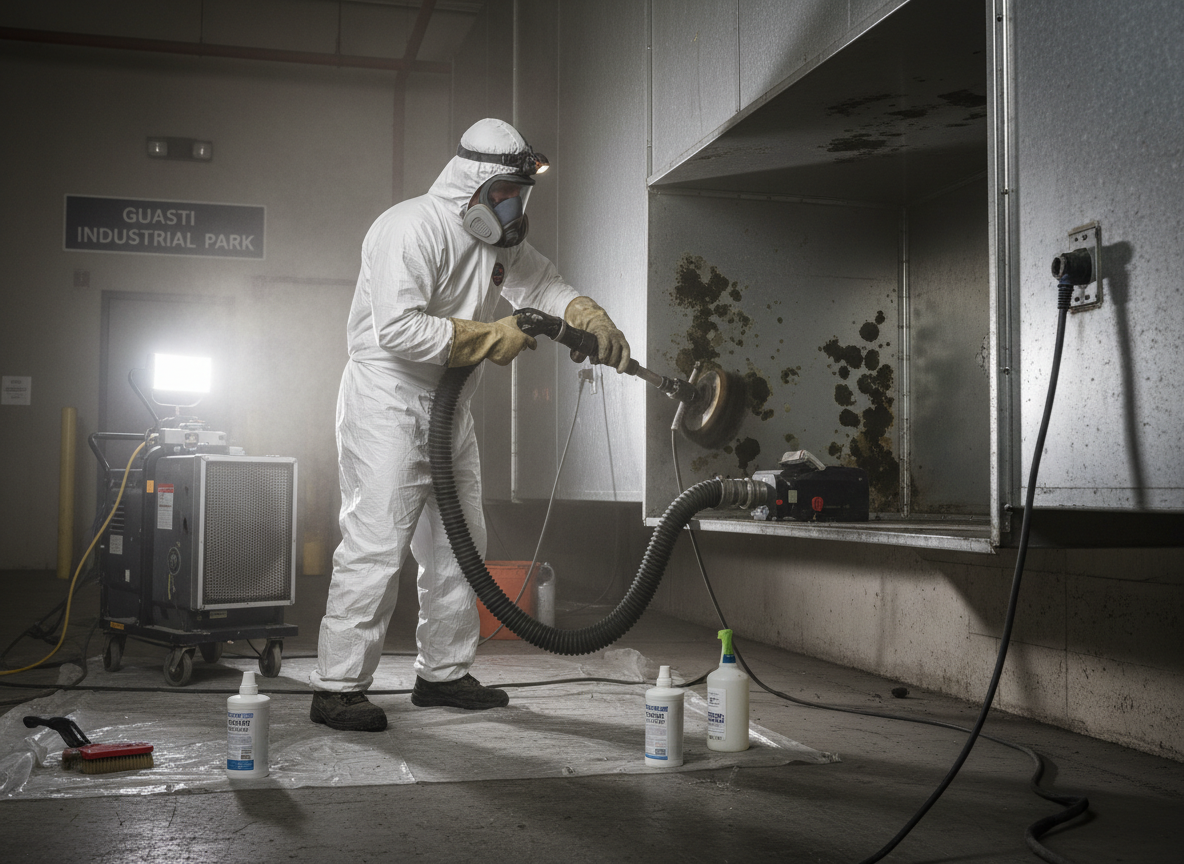
Ventilation mold remediation in Guasti targets growth inside HVAC ducts, attic vents, and crawlspace returns common in the area's older tract homes built from the 1960s onward. San Bernardino County summers drive constant air conditioning use, which creates condensation on metal ductwork when warm, humid air meets cooler surfaces. We use negative-air machines and HEPA filtration to contain spores during removal, then apply EPA-registered antimicrobials only after source moisture is corrected. Access panels must often be cut into rigid ducts running through tight attics insulated with blown cellulose that traps moisture against roof sheathing.
Edge cases we see regularly include mold on flexible duct connections where homeowners added room extensions without proper returns, allowing stale air to stagnate. In Guasti's flat terrain, poor roof slope on some 1970s homes lets rainwater pool near ridge vents, feeding mold that travels back into living spaces through the same ducts. We always test surface and air samples before and after, and we coordinate with local HVAC technicians to reseal joints to current California Energy Code standards so the system does not re-contaminate after we leave.
Homeowners sometimes attempt DIY fogging through return grilles, which only spreads spores deeper into wall cavities and insulation. Our process requires full system isolation, physical removal of visible growth, and verification that relative humidity stays below 50 percent once the system restarts. We document every step with photos for insurance claims common in the Inland Empire after monsoon leaks or plumbing failures.
Technician insight
In Guasti, the thing that catches most people out with ventilation mold remediation is the 1970s tract homes along Turner Avenue where flexible duct runs were never properly supported. They sag and trap condensate from the AC, letting mold grow out of sight until it blows into bedrooms during the first heat wave.
Hidden Duct Mold After AC Condensate Leak
A Guasti homeowner noticed musty smells from the vents after a summer of heavy AC use. We found black mold coating the interior of flex ducts in the attic where condensate had pooled for months. After isolating the system and replacing the contaminated sections, we verified clearance samples and restarted the unit with new filters rated for the area's fine dust.
How it works
- 1
Initial Containment and Assessment
We seal off the HVAC system and affected rooms with plastic sheeting and negative air pressure, then inspect ducts, registers, and attic spaces using borescopes to map visible mold and moisture sources.
- 2
Source Moisture Correction
Technicians locate and stop the water intrusion, whether from roof leaks near vents or AC condensate lines, before any mold removal begins.
- 3
Physical Removal and Cleaning
Mold is removed from rigid and flex ducts using HEPA vacuums and antimicrobial wipes; heavily contaminated sections are cut out and replaced to prevent recurrence.
- 4
Verification and System Restart
Post-remediation air and surface samples are collected; once clearance is confirmed, we restore airflow and advise on filter upgrades suited to Guasti's dusty conditions.
Pricing
Cost depends on the number of affected duct runs, accessibility through attics or walls, and whether sections need replacement.